
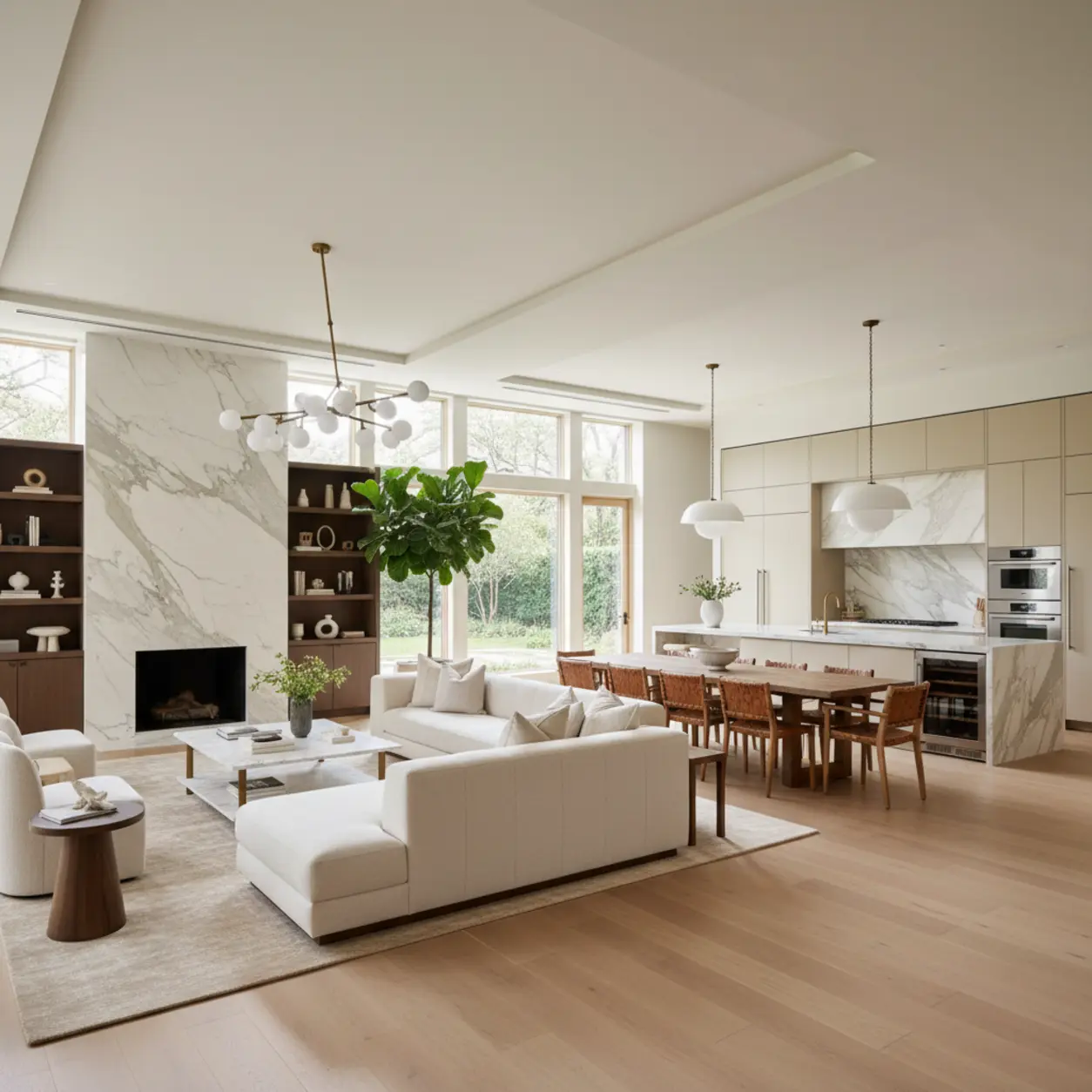
To reside in Dallas is to understand a specific caliber of living. From the historic, tree-lined avenues of the Park Cities to the expansive, mid-century estates of Preston Hollow, our city demands a level of architectural integrity that goes beyond mere construction. When you make the decision to alter your home, you are not simply hiring a contractor to move walls or replace cabinetry. You are engaging in a complex orchestration of design, engineering, and craftsmanship intended to elevate your daily life.
The market for home remodelers in Dallas is saturated with volume-based general contractors. However, for the discerning homeowner, the goal is rarely just “more space.” The goal is refinement. It is the pursuit of a sanctuary that operates seamlessly, looks timeless, and appreciates in value. This distinction requires a partner who understands that true luxury is found in the details that are often felt rather than seen.
Navigating this landscape requires an understanding of the construction process that few homeowners possess at the outset. This editorial serves as a definitive guide to the philosophy and mechanics of high-end remodeling in North Texas, moving past the surface-level aesthetics to the foundational elements that ensure a renovation stands the test of time.
“True luxury is found in thoughtful planning and honest craftsmanship. It’s the lasting peace of mind that your home, built with integrity, will truly endure.”
— Grant Woodruff, Founder
The distinct challenges of remodeling in the North Texas environment
Before a single sketch is drawn, a premier builder must address the invisible adversary of every Dallas home: the soil. The expansive clay soil prevalent in North Texas expands significantly when wet and shrinks when dry. This geological reality dictates that any structural renovation must be approached with forensic precision.
Many standard remodelers will gloss over foundation concerns to focus on the visible finishes—the marble countertops or the imported hardwood. A true design-build firm reverses this priority. We understand that adding a second story or expanding a footprint in neighborhoods like Lakewood or University Park requires a rigorous structural analysis. We often employ helical piers or steel-reinforced concrete beams not because they are glamorous, but because they guarantee that your investment remains level and true for decades.
Furthermore, the Dallas climate—oscillating between blistering summer heat and sudden winter freezes—demands a sophisticated approach to building envelopes. Luxury is not just visual; it is thermal comfort. It is the silence of a room insulated with high-density spray foam and the efficiency of glazing that rejects solar heat gain while admitting natural light. Integrating these technical systems requires a level of expertise that separates a master builder from a handyman.
“True luxury is the absence of friction. It is a home that anticipates your needs, where the lighting is intuitive, the climate is balanced, and the flow of the room enhances the way you live. We don’t just build structures; we curate environments for life to happen.”
— Grant Woodruff, Founder
The design-build advantage over traditional bidding
In the traditional construction model, a homeowner hires an architect to draw plans and then puts those plans out to bid with multiple general contractors. This often leads to a phenomenon known as “value engineering”—a polite term for cutting corners to meet a budget that was never realistic to begin with. The adversarial relationship between the architect (who wants the aesthetic) and the builder (who worries about the cost) often leaves the homeowner caught in the middle.
At Renowned Group, we advocate for and practice the design-build methodology. In this model, the designers and the builders sit at the same table from day one. This singular point of responsibility changes the trajectory of a project entirely.
Cost certainty through early collaboration
When estimation happens alongside design, you are not presented with a beautiful set of blueprints that cost double your budget to build. We price the project as we design it. This allows us to guide you toward high-impact decisions—perhaps choosing a locally sourced limestone that mimics a French import to save cost without sacrificing the aesthetic, or prioritizing architectural steel doors where they make the biggest visual statement.
Seamless execution and accountability
In a fragmented process, if a structural beam conflicts with an HVAC duct, work stops, and change orders fly. In a design-build environment, our teams have likely solved that conflict in the digital modeling phase before a hammer is ever swung. This cohesion is vital for complex renovations, particularly in older Dallas homes where historical preservation guidelines or conservation district rules add layers of regulatory complexity.
Architectural continuity: respecting the home’s lineage
Dallas is a city of distinct architectural pockets. A modern renovation that looks stunning in the Design District might feel jarringly out of place in a Tudor revival home in the M Streets. The hallmark of a sophisticated remodel is “architectural coherence.” The new addition should not look like an appendage; it should feel as though it has always been there, or at least, that it engages in a respectful dialogue with the original structure.
This requires a deep library of knowledge regarding materials. It means sourcing brick that matches a 1940s kiln run, or milling custom trim profiles that replicate the shadow lines of Victorian molding. It also means knowing when to break the rules—how to introduce a contemporary open-concept kitchen into a traditional floor plan without destroying the home’s character.
This is particularly relevant when undertaking a major kitchen remodel in Dallas. The kitchen has evolved from a utilitarian service room to the central hub of entertainment. Bridging the gap between the formal dining rooms of the past and the casual, communal islands of today requires a sensitive design touch that honors tradition while embracing modern functionality.
Transparency as the ultimate luxury
The stereotype of the “disappearing contractor” exists for a reason. In the volume-focused sector of the industry, communication is often the first casualty. For our clientele, time is often the most valuable asset. The anxiety of the unknown is unacceptable.
We believe that peace of mind is purchased through radical transparency. This is why we utilize advanced project management infrastructure. Using our client portal, Buildertrend, you have 24/7 access to your project’s heartbeat. You can view the daily schedule, approve selections, track financials in real-time, and view daily progress photos from your smartphone. You are never left wondering where your project stands.
This level of organization is not merely administrative; it is a reflection of respect. We respect your investment, your home, and your time. By digitizing the chaotic elements of construction, we free up bandwidth to focus on the creative and tactile elements of the build.
The anatomy of a luxury interior renovation
Moving inward, the difference between a standard remodel and a high-end renovation lies in the layers you do not see, which support the layers you do.
The unseen systems
A truly modern home is a machine for living. We integrate smart home technology not as a gadget, but as infrastructure. This means pre-wiring for automated shading that protects your art collection from UV rays, or installing water filtration systems that protect your fixtures from calcium buildup. It involves calculating load requirements for steam showers and heated floors so that they perform flawlessly for years.
Curating materials
In the luxury tier, materials are not just “picked”; they are curated. We look for provenance and performance.
- Natural Stone: We advocate for natural quartzes and marbles, understanding the maintenance they require and sealing them with industrial-grade protectants.
- Wood Flooring: We move beyond pre-finished engineered strips to site-finished, wide-plank white oak, fumed or reactive-stained to achieve depth of color that cannot be mass-produced.
- Cabinetry: Our cabinetry is treated as furniture. Full-inset doors, soft-close Blum hardware, and walnut interiors are not upgrades; they are our baseline standards.
Navigating the neighborhood nuances
An expert Dallas remodeler must also act as a consultant on neighborhood value. Over-improving a home is a risk, but under-improving a home in a rapidly appreciating area is a missed opportunity.
Highland Park & University Park: Here, the land value often exceeds the structure value. Renovations must be of the highest caliber to justify the investment. Sub-standard finishes will immediately devalue the property relative to the market. The focus here is often on “invisible additions”—expanding square footage without altering the protected street facade.
Preston Hollow: With larger lots, the focus shifts to the connection between indoors and outdoors. We often install floor-to-ceiling glazing systems that slide away into pockets, merging the living room with the loggia. The scale of these homes demands grand gestures—higher ceilings, wider hallways, and statement architectural features.
Lakewood & East Dallas: The charm here is eclectic and historic. Renovations must be quirky and soulful. We often work to preserve original stained glass or telephone nooks while modernizing the mechanical guts of the house. The challenge is updating the functionality without scrubbing away the patina that makes the neighborhood desirable.
The Renowned standard of ethics and execution
Any builder can buy wood and concrete. The differentiating factor is the ethos of the company managing the assembly. We operate under a strict code of ethics, validated by our industry standing.
As NARI-certified professionals (National Association of the Remodeling Industry), we are held to a higher standard of business integrity and technical knowledge. This certification is not a badge we buy; it is a rigorous testing of our knowledge regarding building codes, safety protocols, and business practices. It signals to our clients that we are career professionals dedicated to the craft of remodeling, not transient operators chasing a boom market.
Conclusion: The return on enjoyment
We often discuss Return on Investment (ROI) in real estate terms—resale value, equity, and market comparisons. While these are critical metrics, we invite our clients to consider a more immediate metric: Return on Enjoyment.
What is the value of a master bath that feels like a private spa at the end of a stressful week? What is the worth of a kitchen that handles a Thanksgiving dinner for twenty without feeling crowded? What is the price of silence in a home that is properly insulated against the noise of the city?
Choosing a home remodeler in Dallas is a choice between a transaction and a transformation. At Renowned Group, we are dedicated to the latter. We do not simply renovate houses; we elevate the way you live within them.