
Embarking on a significant home renovation is a deeply personal endeavor that permanently alters the environment where your life unfolds. Transforming an existing structure into a bespoke sanctuary requires far more than merely hiring someone to execute a set of blueprints. It demands a partnership with a firm that understands the delicate intersection of architectural integrity, lifestyle curation, and flawless execution.
The anxiety associated with selecting the right professional is entirely justified. The industry is saturated with varied levels of competence, making the vetting process feel overwhelming for those who rightfully expect perfection. When your standard is nothing short of unmatched craftsmanship, the traditional methods of searching for local builders simply fall short.
Finding a luxury contractor in North Texas requires a sophisticated understanding of construction methodology, project management, and regional architectural nuances. This guide is designed to elevate your selection process, ensuring you partner with a firm capable of delivering the peace of mind and pristine results your home deserves.
“We don’t just quote; we plan. True value comes from meticulous pre-construction, ensuring unparalleled quality and absolute peace of mind.”
— Grant Woodruff, Founder
The psychology of selecting a luxury home builder
At the highest level of residential construction, you are not simply paying for labor and materials. You are investing in absolute peace of mind. A premier contractor understands that they are stepping into your private refuge. Their presence must be respectful, their processes must be seamless, and their execution must be precise.
The distinction between an ordinary contractor and a master builder lies in anticipation. A sophisticated firm anticipates structural challenges before they become delays. They foresee how the morning light will interact with the selected natural stone in your primary suite. They understand that every decision made during construction ultimately dictates how effortlessly you will live in the space.
When interviewing potential firms, listen closely to their language. Are they merely focused on square footage and basic finishes, or are they asking profound questions about how your family interacts, entertains, and finds rest within the home? The right partner will focus on lifestyle integration, ensuring the physical space serves as a quiet backdrop to your daily life.
Evaluating the difference between general contractors and design-build firms
The traditional model of home renovation often involves hiring an independent architect to draft plans, followed by bidding those plans out to various general contractors. This fragmented approach frequently creates a combative triangle between the homeowner, the designer, and the builder. When structural realities conflict with design ambitions, the homeowner is left to mediate the friction.
Our integrated design-build methodology eliminates the traditional friction between architects and builders. By unifying the design and construction disciplines under one roof, we ensure that every architectural flourish is grounded in structural viability and budgetary reality from day one. There is a single point of accountability.
This unified approach is particularly critical in complex renovations. When the same team that conceptualized the floor-to-ceiling glazing is also responsible for installing the structural steel required to support it, the result is an uninterrupted flow of communication. The vision is never diluted in translation, resulting in a cohesive, elevated final product.
“The true mark of a luxury contractor is not found in the grand reveal, but in the meticulous, invisible decisions made long before the first wall is opened. We are engineering a legacy, and that requires an uncompromising commitment to both transparency and craftsmanship.”
— Grant Woodruff, Founder
Assessing portfolios for timeless craftsmanship and invisible details
A beautifully photographed portfolio is a prerequisite, but it only tells a fraction of the story. When reviewing a builder’s past work, you must train your eye to look past the staging furniture and focus on the architectural transitions. The hallmark of high-end remodeling is found in the meticulous execution of details that most people never consciously notice.
Examine the alignment of custom cabinetry reveals. Look at how the baseboards meet the door casings, and whether the veining in a Calcutta marble backsplash flows uninterrupted across the seams. A premier builder obsesses over zero-threshold transitions, ensuring hardwood floors flow effortlessly into tiled bathrooms without clumsy transitions.
Consider the integration of modern technology into historic or transitional spaces. Are the HVAC supply registers custom-milled to match the white oak flooring, or are they standard metal grates? Are the automated window treatments hidden seamlessly within custom ceiling pockets? These subtle integrations separate a standard remodel from a curated living experience.
Navigating the unique architectural environment of Dallas
Renovating a home in Dallas requires highly specialized knowledge of the region’s specific environmental and municipal challenges. North Texas is notorious for its highly expansive clay soils, which undergo dramatic volume changes depending on moisture levels. A builder without deep regional expertise will fundamentally fail your foundation.
If you are renovating an estate in Highland Park or University Park, your builder must possess a flawless understanding of the notoriously strict municipal zoning ordinances, impervious surface regulations, and tree preservation requirements. Ignorance of these local codes can lead to catastrophic project delays and forced redesigns.
In neighborhoods like Lakewood or Preston Hollow, where mature trees and historic architectural elements dictate the aesthetic, the goal is often preservation coupled with modernization. A sophisticated builder knows how to reinforce a pier and beam foundation from the 1930s while simultaneously engineering the roof structure to support an open-concept, modern interior.
The importance of non-negotiable industry credentials
In an industry where the barrier to entry can unfortunately be low, credentials serve as a vital filter. You should only entertain firms that hold themselves to the highest national standards of continued education and ethical business practices.
As NARI-certified professionals, we adhere to a stricter code of ethics and quality than the baseline industry requirements. The National Association of the Remodeling Industry sets a rigorous benchmark for financial stability, technical competence, and ongoing professional development. This certification ensures you are working with career craftsmen, not opportunistic operators.
Beyond certifications, demand absolute proof of adequate insurance tailored to high-value properties. Standard general liability policies often fall short when dealing with multi-million dollar estates. Your builder must carry robust builders’ risk insurance and comprehensive workers’ compensation, insulating you entirely from the inherent liabilities of heavy construction.
Understanding the pre-construction phase and why it matters
The most common mistake homeowners make is rushing toward the demolition phase before the project is comprehensively planned. The success of a complex renovation is entirely determined by the rigorous planning that occurs before a single hammer is swung.
Elite builders mandate a dedicated planning period to mitigate risk. This is where comprehensive pre-construction planning becomes the most valuable investment of your project. During this phase, structural engineers assess load paths, HVAC specialists design discrete climate zones, and exact material quantities are calculated to prevent supply chain delays.
Firms that offer free, rapid estimates for major renovations are typically masking a lack of detail. A true fixed-price contract or a highly accurate cost-plus projection can only be generated after hundreds of hours of design, engineering, and subcontractor walkthroughs. Valuing this preparatory phase is the ultimate safeguard against mid-project budget explosions.
The role of technology and transparency in luxury construction
Managing a sophisticated home remodel involves orchestrating dozens of specialized trades, procuring materials from global suppliers, and tracking hundreds of thousands of dollars in expenditures. Without a robust technological infrastructure, chaos is inevitable. You deserve complete visibility into the progression of your home.
Using our client portal, Buildertrend, you have 24/7 access to your project’s schedule and financials. This level of transparency completely removes the anxiety traditionally associated with construction billing. You can view daily site logs, approve custom finish selections, and monitor real-time schedule adjustments from your phone or private office.
True luxury is the absence of worry. When a firm opens its books and its schedule to you, it demonstrates a profound confidence in its operational efficiency. You should never have to chase a contractor for an update or wonder how a recent design change impacted the overall budget.
Red flags to avoid during the interview process
Even highly intelligent homeowners can be seduced by aggressive sales tactics or unusually low bids. It is critical to recognize the warning signs of a contractor who is not equipped to handle a high-end residential project. The most glaring red flag is the promise of an unusually accelerated timeline.
Quality takes time. Curing concrete, acclimatizing custom millwork, and coordinating master tradesmen cannot be artificially rushed without sacrificing the integrity of the home. If a builder promises to finish a complex addition in half the time of their competitors, they are likely skipping vital environmental conditioning steps or using substandard, readily available materials.
Another profound red flag is a lack of a dedicated, physical office space and a robust internal team. A master builder is supported by project managers, interior designers, and administrative staff. A contractor operating exclusively out of a truck simply cannot provide the elevated, white-glove service required for a luxury renovation.
Questions you must ask during reference checks
When a builder provides references, they are inevitably offering their most satisfied clients. To extract genuine value from these conversations, you must ask highly specific, penetrating questions that go beyond basic satisfaction. The goal is to uncover how the firm behaves under pressure.
Ask the reference: “Can you describe a moment during the project when something went wrong, and how did the builder handle it?” In complex renovations, unforeseen challenges—like discovering hidden water damage behind brick veneer—are unavoidable. You want a partner who presents solutions, not excuses, when faced with architectural surprises.
Furthermore, inquire about the cleanliness and security of the job site. Ask: “Did the tradesmen respect your property, and was the site meticulously cleaned at the end of each day?” A disorganized, chaotic job site is a direct reflection of a disorganized mind. A premier builder treats your property with the utmost reverence, even when it is reduced to the studs.
Elevating the most critical spaces of your home
When vetting a contractor, pay special attention to how they discuss the most technically demanding areas of the home. Kitchens and primary bathrooms require a flawless convergence of plumbing, electrical, ventilation, and custom carpentry. These spaces leave absolutely no margin for error.
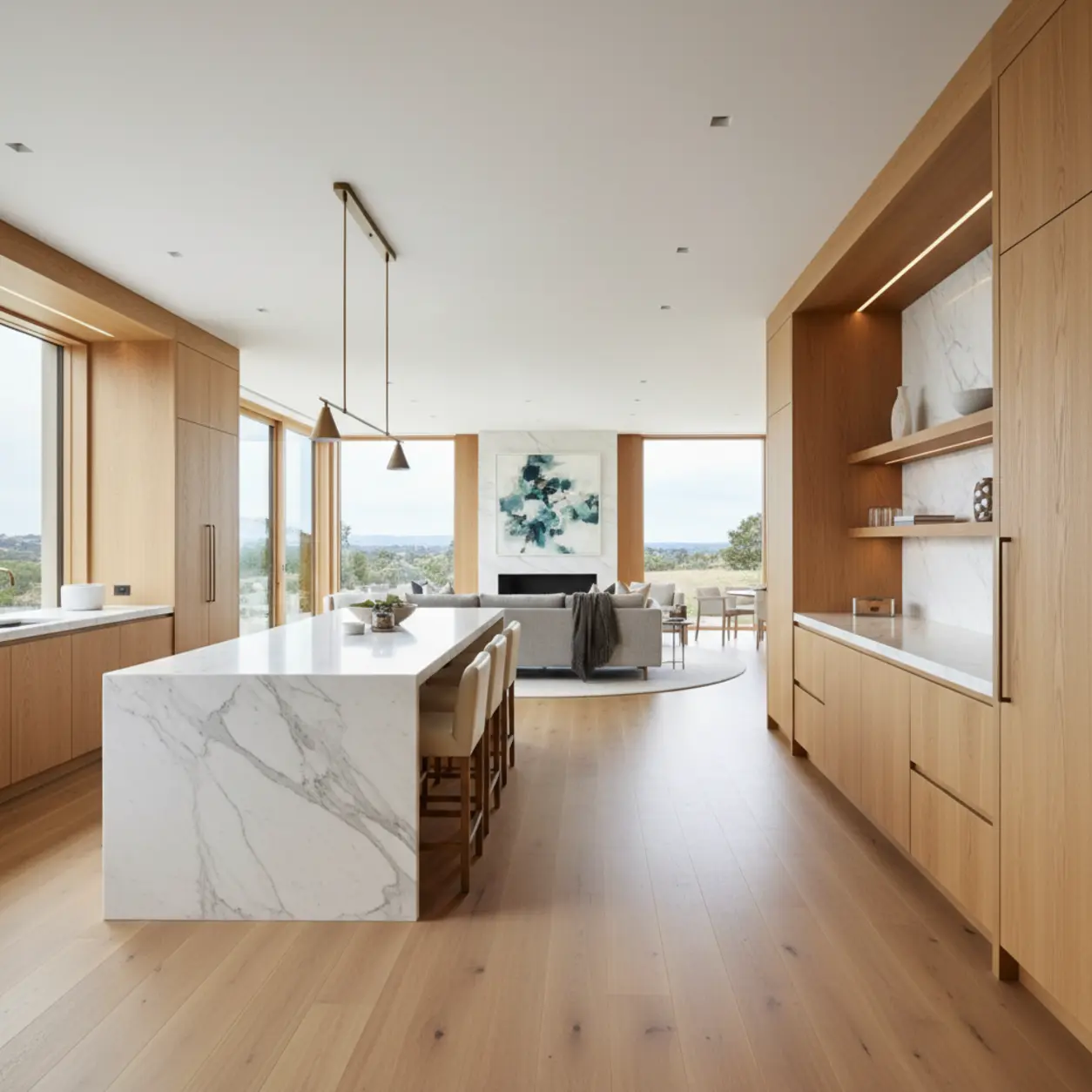
A sophisticated builder will discuss the functional flow of the space just as much as the aesthetic finishes. For example, during an elevated kitchen remodel in Dallas, the focus should be on creating dedicated zones for culinary preparation, entertaining, and quiet morning routines. They should recommend integrated, paneled appliances that disappear into bespoke cabinetry, ensuring the kitchen feels like an extension of the living space rather than a utilitarian room.
In primary en-suites, ask about their methodology for moisture management and acoustic privacy. High-end bathrooms should feature advanced waterproofing membranes, whisper-quiet ventilation systems, and sound-dampening insulation in the interior walls. These invisible upgrades transform a standard bathroom into a true restorative sanctuary.
The financial structure of a premier remodeling partnership
Understanding the financial structure of a high-end remodel is essential for protecting your investment. The two most common contract structures are fixed-price and cost-plus. Both have merit, but how your contractor administers them reveals their integrity.
In a fixed-price contract, the builder assumes the risk of price fluctuations, which is why a meticulous pre-construction phase is mandatory. Every light fixture, plumbing valve, and square foot of tile must be selected and priced before the contract is signed. This requires discipline from both the builder and the homeowner, but it guarantees financial certainty.
Beware of contracts padded with unusually low “allowances” for luxury finishes. Less scrupulous contractors will win a bid by allocating a budget for standard ceramic tile, knowing full well you desire hand-cut marble. This guarantees massive change orders later in the project. A reputable builder sets realistic, premium allowances that genuinely reflect your refined taste from the very beginning.
Prioritizing acoustic engineering and environmental control
One of the most overlooked aspects of luxury home building is the sensory experience of the environment. A truly bespoke home is incredibly quiet, maintaining a consistent, comfortable climate regardless of the intense Texas heat outside. Your contractor should be fluent in advanced building science.
Discuss the implementation of variable-speed HVAC systems equipped with hospital-grade air purification and whole-home dehumidification. Ask about their approach to acoustic engineering. Are they using solid-core doors, specialized sound-dampening drywall, and cast-iron plumbing drops to ensure that water moving through the walls is completely inaudible in the living areas?
These are the markers of a sophisticated builder. They do not merely build structures that look beautiful in a magazine; they engineer environments that feel fundamentally different to inhabit. The air is cleaner, the rooms are quieter, and the temperature is always perfect.
Post-construction service and securing your legacy
The relationship with your builder should not terminate on the day of the final walkthrough. A luxury home is a complex, living machine that requires ongoing tuning and maintenance as the materials settle and acclimate to their new environment.
When interviewing firms, examine their warranty structure and dedicated service department. The best builders view the completion of construction as the beginning of a lifelong relationship. They conduct proactive walk-throughs at the six-month and one-year marks to adjust custom cabinet hinges, inspect exterior sealants, and address any microscopic settling cracks in the drywall.
Finding the right contractor for a home renovation in Dallas is ultimately about finding a firm that aligns with your uncompromising standards. It requires looking past the initial bid and examining their operational transparency, their technical expertise, and their dedication to the craft. By demanding excellence in the invisible details, you ensure that your renovated home will stand as a timeless, elevated sanctuary for generations to come.