
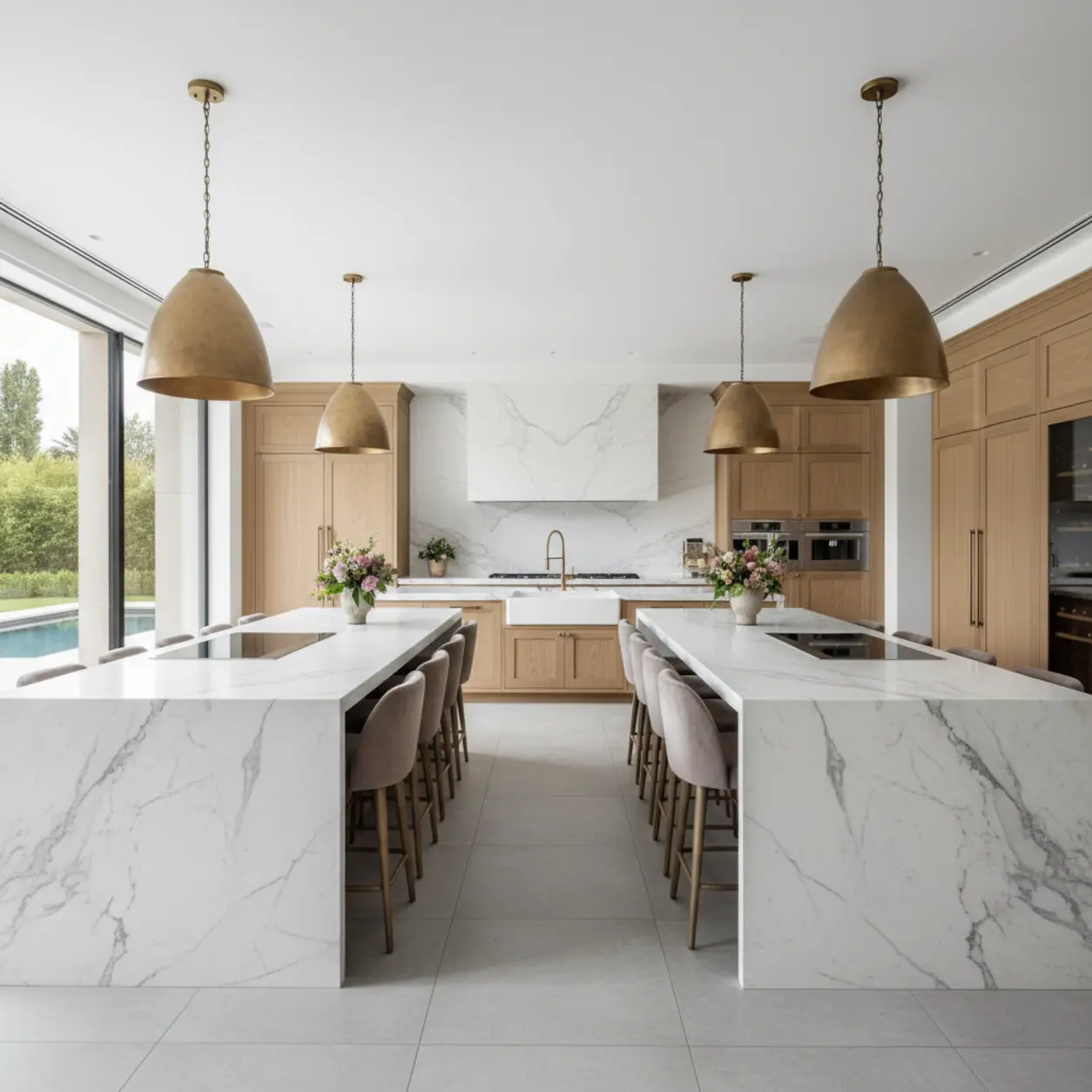
The kitchen has transcended its historical role as a mere utilitarian space for food preparation. In the modern luxury residence, it stands as the architectural heartbeat of the home, a sanctuary where culinary precision meets effortless entertaining. Whether you are hosting an intimate wine tasting in Highland Park or gathering your family for a Sunday morning in Preston Hollow, the spatial harmony of your kitchen dictates the rhythm of your daily life.
Designing a space of this caliber requires looking far beyond the superficial selection of beautiful finishes. The foundation of every timeless kitchen is a meticulously planned layout that anticipates your movements and lifestyle. A masterfully curated floor plan provides an invisible sense of order, allowing multiple people to interact within the space without friction or congestion.
Before considering the nuances of custom inset cabinetry or the veining of a rare marble slab, one must understand the structural canvases available. By examining the six primary kitchen layouts, you can begin to visualize how spatial engineering can elevate your daily routines into a seamless, highly refined experience.
“A luxury kitchen demands meticulous planning. We build timeless precision and unparalleled function, ensuring an elevated life and absolute peace of mind.”
— Grant Woodruff, Founder
The philosophy behind spatial planning in modern architecture
For decades, residential design relied heavily on the concept of the classic work triangle, connecting the sink, range, and refrigerator in a tight geometric configuration. While foundational, this concept is entirely insufficient for the scale and complexity of today’s luxury homes. High-end architectural planning has evolved from the work triangle to the concept of specialized functional zones.
In a bespoke residence, the kitchen is rarely occupied by a single individual performing a sequential task. You may have a caterer preparing hors d’oeuvres in a prep zone, guests conversing around a chilling station, and a family member utilizing a dedicated barista counter. The layout must absorb all of this activity simultaneously, offering intuitive pathways and clear sightlines that connect the culinary space to the adjacent living and dining areas.
Choosing the correct layout is a delicate balancing act between the architectural constraints of your home and the lifestyle you wish to cultivate. It requires a profound understanding of traffic flow, natural light penetration, and structural scale. This is where engaging in meticulous pre-construction planning becomes the defining factor between a standard renovation and a true architectural masterpiece.
The single wall kitchen layout and its minimalist appeal
Often referred to as the I-shaped kitchen, the single wall layout consolidates all cabinetry, appliances, and preparation surfaces along a single linear plane. While historically associated with smaller urban footprints, this layout has been radically reimagined in contemporary luxury architecture. It is frequently utilized in sweeping, open-concept modern homes where the kitchen is designed to serve as a stunning, uninterrupted visual backdrop to the primary living space.
The brilliance of the single wall layout lies in its supreme minimalism. Because the footprint is restrained to one elevation, designers can justify utilizing extraordinary, high-impact materials. We often elevate this layout by incorporating floor-to-ceiling monolithic stone backsplashes and flush, panel-ready appliances that completely disguise the room’s utilitarian purpose. When the cabinetry runs continuously from the floor to a soaring ceiling, it draws the eye upward, celebrating the architectural volume of the room.
To maximize functionality without compromising the sleek aesthetic, a single wall layout demands highly sophisticated internal storage solutions. Motorized upper cabinets, hidden appliance garages, and deep organizational drawers ensure that countertops remain entirely devoid of clutter. The result is a curated, gallery-like environment that seamlessly blurs the line between a high-performance culinary space and a sophisticated living area.
The galley kitchen design optimized for culinary precision
The galley, or corridor layout, features two parallel runs of cabinetry and countertops separated by a central walkway. While some homeowners mistakenly view the galley as a restrictive layout, professional chefs and culinary purists consistently revere it as the ultimate configuration for cooking efficiency. By confining the preparation and cooking zones to a tight, parallel arrangement, the galley eliminates unnecessary steps and places every tool within immediate reach.
In high-end Dallas estates, particularly within the historic architecture of Lakewood or University Park, the galley layout offers an opportunity to create a deeply immersive culinary environment. The secret to mastering the luxury galley is managing the visual weight of the space so it feels expansive rather than enclosed. We achieve this by thoughtfully distributing the functional elements and manipulating natural light.
For instance, one wall might house the heavy vertical elements, such as integrated column refrigeration, a towering wine climate cabinet, and a concealed pantry entrance. The opposite wall is then left completely free of upper cabinetry, featuring a stunning custom plaster ventilation hood flanked by open architectural shelving and expansive casement windows. This deliberate asymmetry floods the corridor with natural light and creates a sophisticated breathing room that transforms the galley into an intimate, high-functioning sanctuary.
The L-shaped layout as the quintessential open concept foundation
The L-shaped kitchen layout utilizes two adjacent walls that meet in a corner, creating an open, welcoming geometry that naturally integrates with surrounding living and dining spaces. It is universally celebrated as one of the most versatile and adaptable configurations in modern residential design. By leaving two sides of the kitchen entirely open, the L-shape invites a fluid transition between the host and their guests.
This layout excels in establishing distinct zones. The longer leg of the L typically houses the primary cleanup and preparation stations, allowing for expansive, uninterrupted runs of countertop space. The shorter leg often accommodates the cooking zone, featuring a statement professional range. This natural division of labor ensures that multiple individuals can comfortably utilize the kitchen without crossing paths or interrupting the workflow.
However, the corner of an L-shaped kitchen presents a unique structural challenge that requires expert intervention. In a bespoke build, dead corners are entirely unacceptable. We integrate precision-engineered blind corner mechanisms, such as articulated pull-out shelving systems, to ensure every cubic inch of the cabinetry is accessible and highly functional. When paired with layered lighting and extraordinary craftsmanship, the L-shape becomes a brilliant canvas for both daily family life and elegant evening hosting.
The U-shaped kitchen offering immersive culinary environments
Also known as the horseshoe layout, the U-shaped kitchen features three distinct walls of cabinetry and countertops, creating a deeply enveloping culinary workspace. This configuration offers an unmatched abundance of storage and preparation surface, making it the premier choice for large families and homeowners who require extensive, dedicated zones for specialized cooking tasks.
The U-shape naturally restricts cross-traffic, as it features only one point of entry and exit. This creates an exclusive, highly protected environment where the chef operates completely undisturbed by the general flow of the home. Because the architectural footprint is so vast, a U-shaped kitchen provides the opportunity to create perfect symmetry, placing a dramatic architectural focal point, such as a custom metal range hood, at the exact center of the horseshoe.
“True luxury in a kitchen isn’t found merely in the selection of exotic stone or professional-grade appliances. It exists in the invisible architecture—the meticulous spatial planning that anticipates your movements, creating an environment where culinary exploration and entertaining happen with absolute, effortless fluidity.”
— Grant Woodruff, Founder
The risk of a U-shaped layout is that it can feel cavernous or visually heavy if not designed with extreme care. To prevent this, our design ethos dictates a delicate balance of materials and elevations. We frequently integrate towering glass-front display cabinetry equipped with integrated circadian lighting to break up heavy blocks of solid wood. By utilizing lighter, highly reflective natural stones for the countertops and backsplashes, we bounce light deep into the corners of the U, ensuring the space feels airy, elevated, and exceptionally refined.
The G-shaped peninsula layout for distinct spatial boundaries
The G-shaped layout is an evolution of the U-shape, featuring a fourth, partial leg of cabinetry that extends into the room as a peninsula. This design is exceptionally strategic for homeowners who desire the storage capacity and enclosure of a U-shape, but also require integrated seating and a defined architectural boundary between the kitchen and the adjoining living areas.
Unlike a freestanding island, a peninsula is anchored to a primary wall, which visually extends the footprint of the cabinetry. This makes the G-shape highly effective in specific structural scenarios where the room’s dimensions are too narrow to accommodate a central island with proper clearances, yet too large to leave the center completely open. The peninsula acts as a natural conversational barrier, allowing guests to sit and engage with the host while remaining safely outside the primary cooking zone.
In a luxury setting, the peninsula is treated as a major design feature rather than an afterthought. We often lower or raise the peninsula counter slightly to differentiate the dining surface from the preparation surface, utilizing contrasting materials. A deeply stained walnut dining ledge might intersect with a cool, honed marble prep zone, creating a tactile and visual transition that speaks to the bespoke nature of the home.
The island kitchen layout redefining Dallas entertaining
For grand estates in University Park and expansive Preston Hollow properties, the island kitchen layout is less of an option and more of a foundational requirement. This layout typically evolves from an L-shaped or single-wall foundation, using one or more freestanding islands to anchor the entire room. The architectural weight of a massive, perfectly proportioned island creates a natural gravitational pull, immediately establishing the kitchen as the social epicenter of the residence.
The integration of an island radically alters the functionality of a kitchen. It allows us to create dual-facing environments where one side is ruthlessly engineered for professional culinary tasks, while the opposite side is curated entirely for hospitality. The chef’s side seamlessly conceals secondary prep sinks, dual dishwasher drawers, and specialized waste management systems, leaving the guest-facing elevation pristine and architectural.
In our most comprehensive projects, we frequently implement the dual-island concept. One island is dedicated strictly to food preparation, staging, and cleanup, while the secondary island serves as a permanent dining and gathering space. This completely separates the culinary mechanics from the entertaining experience. Whether utilizing matched slabs of rare quartzite cascading in waterfall edges or introducing custom brass inlay details, the island is the ultimate expression of your personal aesthetic.
Executing a flawless island layout requires an uncompromising adherence to spatial metrics. Proportion and clearance are the invisible indicators of luxury. We mandate generous clearances—often exceeding 48 inches—around primary islands to guarantee that multiple individuals can navigate the space seamlessly. This level of precise spatial engineering is exactly what defines a luxury kitchen remodel in Dallas that will stand the test of time and trend.
Selecting the right layout through our design build methodology
Determining which of these six layouts will perfectly serve your home is not a decision that can be made in isolation. It requires a holistic evaluation of your property’s structural architecture, your family’s daily rhythms, and your personal entertaining style. Moving load-bearing walls, rerouting complex plumbing infrastructure, and upgrading electrical panels to accommodate professional-grade appliances are significant undertakings that demand an elite level of technical foresight.
Bringing these complex, bespoke layouts to life requires a methodology that matches the sophistication of the design itself. Our integrated design-build process completely eliminates the friction, miscommunication, and costly delays traditionally found between independent architects and residential contractors. By operating under one unified roof, we ensure that the exquisite vision drawn during the planning phase is the exact, flawless reality constructed in your home.
As NARI-certified professionals, we adhere to an uncompromising standard of craftsmanship, ethics, and execution. We understand that a luxury remodel is a significant intervention in your private sanctuary, and we believe the construction experience should be as elevated as the final product. Using our client portal, Buildertrend, you have 24/7 access to your project’s schedule and financials, ensuring absolute transparency and peace of mind throughout the entire journey.
A beautifully designed kitchen does more than elevate the value of your property; it profoundly enhances the quality of your daily life. It provides a flawless environment for quiet morning reflections, exuberant holiday celebrations, and everything in between. If you are ready to explore how expert spatial planning can transform your residence, partner with the premier Dallas custom home builder dedicated to the art of bespoke living. Together, we will curate a culinary space that is undeniably timeless, exceptionally functional, and uniquely yours.