
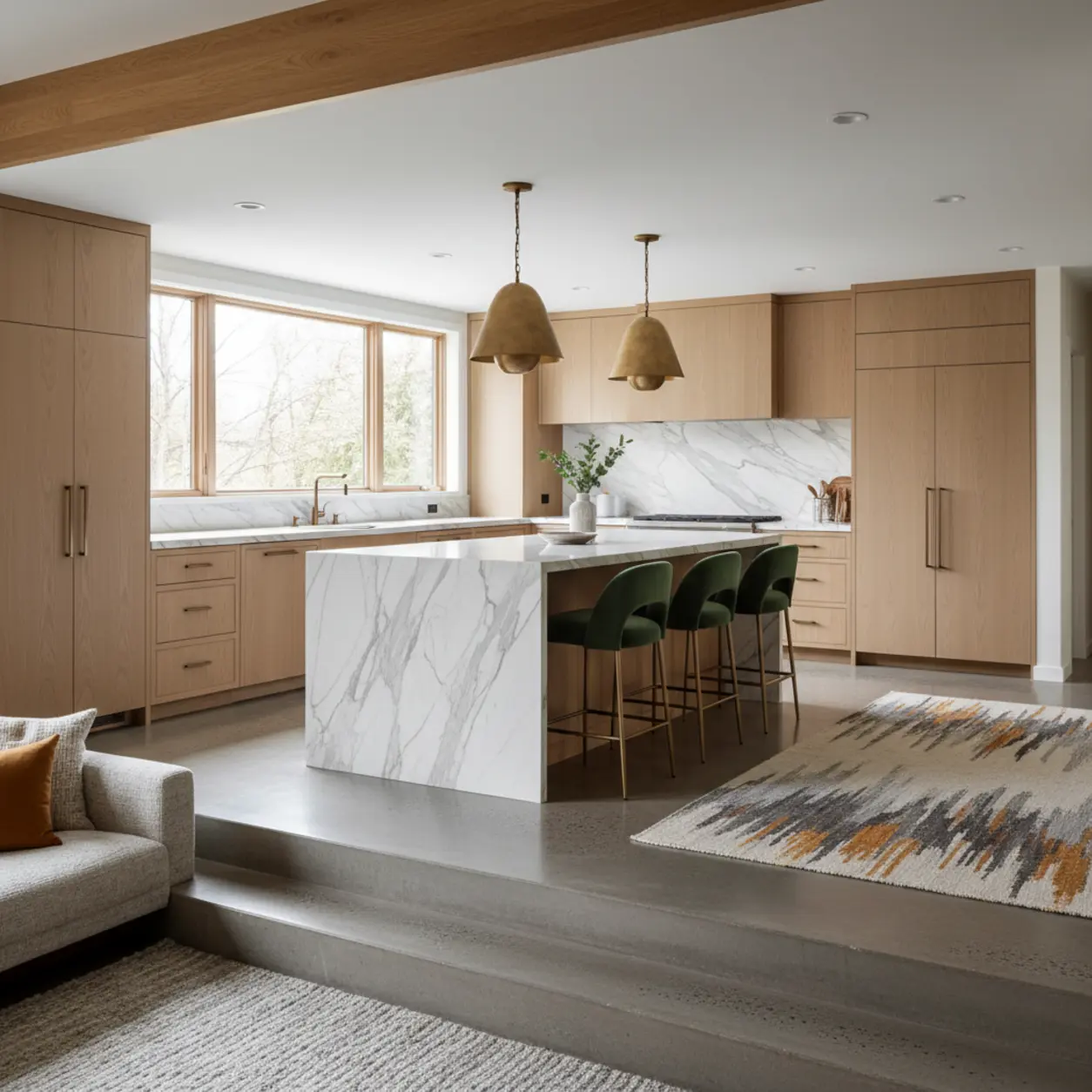
The 1970s split-level home holds a distinct place in the architectural history of Dallas. Found in established, tree-lined neighborhoods from Lakewood to the quiet enclaves of Richardson and North Dallas, these homes were originally celebrated for their innovative separation of public and private spaces. However, the way we live has fundamentally evolved over the past fifty years. The modern homeowner no longer desires a compartmentalized lifestyle where the kitchen is treated merely as a closed-off utility room.
Today, the kitchen is the undisputed soul of the home. It is a curated space for culinary exploration, effortless entertaining, and daily connection. Transforming a 1970s split-level kitchen into a breathtaking, modern sanctuary requires far more than cosmetic updates. It demands a sophisticated understanding of structural engineering, spatial psychology, and refined craftsmanship. When executed with precision, this renovation completely recalibrates the energy and flow of the entire residence.
At Renowned Group, we approach these unique architectural footprints with quiet confidence and meticulous intention. Our objective is never simply to tear down walls, but rather to erase visual boundaries and orchestrate a seamless transition between living, dining, and cooking environments. True luxury is found in the absence of friction, creating an environment that feels both elevated and inherently natural to the home’s original site lines.
“Unwavering integrity. Our meticulous planning and flawless execution build enduring quality, delivering true peace of mind.”
— Grant Woodruff, Founder
Understanding the architectural DNA of the split-level residence
To successfully reimagine a split-level kitchen, one must first understand the architectural intent behind its original design. The 1970s builder prioritized distinct zones: a formal living room upon entry, a separated kitchen and dining area on the main or upper tier, and a sunken family room below. This staggered floor plan relied heavily on load-bearing partitions and central staircases to support the complex rooflines and floor joists.
This inherent compartmentalization is the primary obstacle to achieving a modern, airy aesthetic. The kitchen in these homes is often boxed in by a structural wall that blocks natural light from the front of the house and disconnects the chef from guests in the adjacent living areas. Removing this barrier is the critical first step, but it is also the most structurally complex maneuver in the entire renovation process.
Unlike a traditional single-story ranch, a split-level home’s central wall often supports not just the ceiling joists, but also the framing for the adjacent staircase and the overarching roof loads. Altering this structural spine requires flawless engineering and strategic foresight to ensure the integrity of the home remains completely uncompromised.
The meticulous process of structural reinvention
Achieving an uninterrupted, sweeping ceiling line where a wall once stood is a hallmark of high-end remodeling. Less experienced contractors often resort to dropped headers—heavy, visible beams that protrude below the ceiling and interrupt the visual flow. For a truly bespoke finish, we insist on flush beam installations whenever structurally viable.
By recessing engineered steel flitch plates or laminated veneer lumber (LVL) beams directly into the ceiling cavity, we create a continuous, flawless plane that draws the eye across the entire expanse of the new open space. This technique demands precision framing and often requires rerouting critical mechanical, electrical, and plumbing systems that were previously hidden inside the demolished wall.
This level of structural reinvention is exactly why a cohesive approach is non-negotiable. Through our integrated design-build methodology, the friction between architectural vision and construction reality is completely eliminated. Every beam span, point load, and HVAC pathway is mapped out rigorously during the pre-construction planning phase, long before a single wall is opened.
Reclaiming vertical space by eliminating outdated soffits
A pervasive design trend in the 1970s was the implementation of dropped kitchen soffits—boxy, drywall enclosures that sat above the upper cabinets. Originally intended to hide ductwork, plumbing, or wiring, these soffits visually compress the room, making standard eight-foot ceilings feel even lower and more claustrophobic.
Removing these soffits is essential for an elevated, luxurious kitchen design. By reclaiming that crucial vertical space, we can install custom, ceiling-height cabinetry that draws the eye upward and dramatically expands the perceived volume of the room. This not only maximizes hidden storage but provides a grand, monolithic aesthetic that defines modern luxury.
When soffits do conceal essential infrastructure, our NARI-certified professionals expertly reroute those mechanicals through floor joists or discreet custom chases. The goal is always to manipulate the architecture to serve the design, rather than allowing the design to be compromised by the architecture.
Navigating the invisible complexities of aging infrastructure
Beneath the surface of any fifty-year-old home lies a network of aging infrastructure that must be addressed to ensure decades of uninterrupted peace of mind. True luxury is not just what you can see; it is the silent, flawless performance of the home’s unseen systems. Many 1970s homes in Dallas still harbor original cast iron plumbing, galvanized water lines, and outdated electrical panels that cannot support the demands of a modern culinary space.
Integrating professional-grade appliances, dedicated wine climate columns, and layered LED lighting arrays requires a robust electrical foundation. We meticulously upgrade these foundational elements, replacing end-of-life plumbing stacks and upgrading electrical services to accommodate dual-fuel ranges, steam ovens, and advanced ventilation systems.
Managing these highly technical updates while maintaining a strict timeline requires absolute operational clarity. We believe our clients deserve complete visibility into their investment. Using our client portal, Buildertrend, you have 24/7 access to your project’s schedule, daily logs, and financials, ensuring a sophisticated and transparent remodeling experience.
“True luxury remodeling isn’t just about selecting beautiful finishes. It’s about honoring the architectural integrity of the home while engineering a space that performs flawlessly for the way a modern family actually lives.”
— Grant Woodruff, Founder
Curating materials that honor the past while defining the future
The aesthetic transformation of a split-level kitchen requires a delicate balance. The materials selected must feel timeless, offering a quiet sophistication that transcends fleeting design trends. We deliberately move away from the heavy, ornate details of past decades, focusing instead on clean lines, organic textures, and unparalleled craftsmanship.
For cabinetry, bespoke millwork is paramount. We frequently utilize rift-sawn white oak for its linear, understated grain, paired with custom stains that bring warmth to the space without dominating it. When painted finishes are desired, we lean toward muted, sophisticated tones—warm taupes, deep charcoals, or soft earthen greens that ground the kitchen in its natural surroundings.
Countertops and vertical surfaces offer an opportunity to introduce striking, yet elegant, natural elements. Moving beyond the busy, high-gloss granites of the early 2000s, we curate slabs of honed quartzite, dramatic marble, or ultra-durable sintered stone. Bringing the countertop material up the wall as a solid slab backsplash creates a continuous, unbroken visual plane that exudes modern opulence.
Optimizing the spatial rhythm with a statement island
Once the confining walls of the split-level floor plan are removed, the kitchen island becomes the new architectural anchor of the home. It is the transitional element that bridges the cooking zone with the living and dining areas. In a high-end remodel, the island is far more than a prep surface; it is a meticulously designed piece of functional furniture.
The proportions of the island must be perfectly calibrated to the newly expanded space. A generous, oversized island offers a place for casual morning espresso, a buffet surface for evening entertaining, and a discrete location to house hidden appliances like microwave drawers, secondary dishwashers, and integrated waste management systems.
We often design islands with striking waterfall edges, where the stone cascades down the sides to the floor, reinforcing a sense of permanence and grandeur. The island orchestrates the flow of foot traffic, ensuring that the chef remains part of the social dynamic while keeping guests safely out of the primary work triangle.
Integrating quiet technology and hidden functionality
A hallmark of a truly elevated kitchen is the absence of visual clutter. The most sophisticated luxury kitchen remodels in Dallas embrace the concept of “hidden utility.” We achieve this through the careful integration of panel-ready appliances, which are clad in the same bespoke cabinetry as the rest of the kitchen, allowing refrigerators and dishwashers to disappear seamlessly into the background.
Beyond appliances, we frequently design secondary spaces, often referred to as sculleries or prep kitchens, whenever the floor plan allows. By repurposing an underutilized adjacent dining room or expanding into an existing footprint, we create a hidden enclave for messy prep work, small appliance storage, and secondary cleanup.
This strategic layout ensures that the primary kitchen remains a pristine, visually stunning backdrop for entertaining, completely free of the utilitarian mess associated with complex meal preparation. It is the ultimate expression of a home that works effortlessly for its inhabitants.
Expanding fenestration to embrace natural light
A common deficiency in 1970s architecture is the underutilization of natural light. Windows were often small, awkwardly placed, and heavily trimmed. To breathe life into a newly opened split-level kitchen, we must evaluate the exterior envelope of the home and strategically expand the fenestration—the arrangement and size of the windows and doors.
By replacing small, outdated windows with expansive, floor-to-ceiling glazing or massive picture windows over the sink, we flood the interior with natural sunlight. This not only highlights the bespoke finishes of the cabinetry and stone but fundamentally alters the mood of the space.
When the kitchen backs onto a patio or pool area, we often engineer the installation of multi-slide or folding glass door systems. This architectural intervention entirely dissolves the barrier between indoor comfort and outdoor living, a highly sought-after feature for the Dallas climate.
Redefining the staircase: The core of the split-level
You cannot execute a flawless 1970s split-level kitchen remodel without addressing the staircase. Because these homes are defined by their staggered levels, the stairs are always within the immediate sightline of the kitchen. Originally, builders often enclosed these staircases with heavy half-walls capped with cheap wood trim, or worse, wrapped them entirely in drywall.
To unify the newly opened living space, we completely reimagine the vertical transitions. We strip away the bulky half-walls and replace them with custom-fabricated ironwork, sleek horizontal cabling, or structural frameless glass balustrades. This seemingly minor adjustment allows light to pass freely between the levels, making the sunken family room and the upper bedrooms feel like intentional, cohesive extensions of the main living area.
Furthermore, we coordinate the flooring perfectly. By lacing in new white oak hardwoods to match the existing floors and applying a unified, custom stain across all levels, we trick the eye into seeing one vast, continuous sanctuary rather than a series of disjointed boxes.
Mastering the layered lighting design
Even the most exquisite materials will fall flat without a masterfully engineered lighting plan. In a modern luxury remodel, lighting is never an afterthought; it is an architectural element designed to evoke emotion and enhance functionality. We employ a layered approach to lighting that completely transforms the kitchen from day to night.
The first layer is ambient lighting, achieved through strategically placed, high-CRI (Color Rendering Index) recessed LED fixtures that wash the room in clean, natural-looking light without creating harsh shadows. The second layer is task lighting, meticulously integrated beneath upper cabinets and inside pantries to illuminate workspaces with absolute precision.
The final, and most impactful, layer is the decorative lighting. Oversized, statement pendants suspended above the island serve as the jewelry of the room. By putting every light source on dedicated, smart-dimming circuits, we give the homeowner total control over the atmosphere, allowing the space to transition effortlessly from bright morning energy to a moody, intimate evening glow.
Final thoughts on transforming your split-level residence
Remodeling a 1970s split-level home requires a level of restraint, vision, and technical mastery that goes far beyond standard general contracting. It is an exercise in honoring the structural reality of the past while boldly engineering a space tailored for the future. The result is a home that feels neither dated nor overly trendy, but rather perfectly balanced and timeless.
Your home should be a direct reflection of your lifestyle—a place of quiet luxury where every detail has been thoughtfully curated to provide an unmatched living experience. We pride ourselves on executing these complex transformations with zero compromises, ensuring that the finished product exceeds even the most exacting standards.
If you reside in a split-level or mid-century property and are ready to experience a radically different approach to high-end design and construction, we invite you to explore the Renowned Group standard. Together, we will elevate your environment, crafting a culinary and living space that stands as a testament to exceptional design and flawless execution.